

Glass Vials FAQs: Your Questions Answered
Posted by Melissa Liedtke on Mar 19, 2026
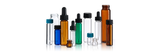
Glass vials are one of the most widely used containers in a variety of industries from pharmaceutical and laboratory, to government, fragrance, and more. Known for their chemical resistance, purity, and durability, glass vials provide a reliable container for liquids, powders, samples, and sensitive formulations.
The following FAQ answers the most common questions about vial materials, borosilicate glass, sizing, closures, and industry applications.
What is a Glass Vial?
A glass vial is a small cylindrical container designed to safely store liquids, powders, or samples in controlled quantities. Glass vials are commonly manufactured from borosilicate glass or soda-lime glass and are widely used in testing, packaging, samples, and storage.
All of the screw top glass vials offered at Discount Vials are manufactured from Type I borosilicate glass, providing excellent chemical resistance, thermal stability, and reliable performance.
Our glass vials feature a threaded neck finish, allowing them to be paired with secure closures such as screw caps and droppers. Because glass is stable and non-reactive, it helps maintain product purity and stability, which is critical for scientific, medical, and specialty packaging applications.
How Big Is a Glass Vial?
|
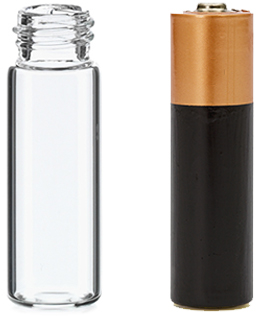
Discount Vials offers glass vials that come in a range of sizes, but one of the most common sizes is a 1 dram glass vial, which holds approximately 3.7 mL of liquid. To help visualize the size, a 1 dram vial is roughly the height of a standard AA battery. Discount Vials offers glass vials in a range of sizes, from 1/4 dram to 10 dram, providing flexible capacity options. |
 |
How Do I Know What Capacity a Dram Is?
A dram is a unit of measurement commonly used to describe the capacity of glass vials. Dram sizes are used to indicate the approximate volume a vial can hold. Dram sizes can be confusing because they are not always labeled in milliliters or ounces.
To make sizing easier, Discount Vials provides a conversion calculator on our homepage that helps convert dram sizes to common capacity measurements. This tool makes it simple to determine the right glass vial size for your product!
What is Type I Borosilicate Glass?
Type I borosilicate glass is the highest quality glass material used in containers. This type of glass mainly consists of silica and boron oxide, which significantly increases its resistance to heat, chemicals, and thermal shock.
Because of these properties, Type I borosilicate glass vials are considered pharmaceutical and laboratory grade containers. They can withstand sterilization, temperature changes, and exposure to reactive chemicals without degrading or interacting with the contents inside the vial.
Borosilicate glass is widely used for analytical testing, injectable medications, chemical storage, chromatography samples, and pharmaceutical research where container purity is essential.
Are Glass Vials Considered Chemically Inert?
Glass vials are considered chemically inert containers, meaning they do not easily react with the materials stored inside them. This is particularly important for formulations, chemicals, specialty oils, and sensitive samples.
Unlike some plastics, high-quality glass vials do not leach compounds into the product or absorb ingredients from the formulation. This helps maintain chemical stability, product purity, and accurate testing results. For this reason, type I borosilicate glass vials are the preferred container for laboratory analysis, pharmaceutical packaging, and high-purity chemical storage.
Are Glass Vials FDA Approved?
Glass vials themselves are not “FDA approved,” but they can be FDA compliant when made from materials that meet FDA standards for food and product contact. All screw-top glass vials offered by Discount Vials are made from Type I borosilicate glass, which is recognized as an FDA-compliant material due to its purity, durability, and non-reactive properties. This makes it a reliable option for packaging products where material safety and compliance are important.
What Industries Commonly Use Glass Vials?
Glass vials are used across a wide range of industries where precision packaging and material stability are important. Common industries include:
Pharmaceutical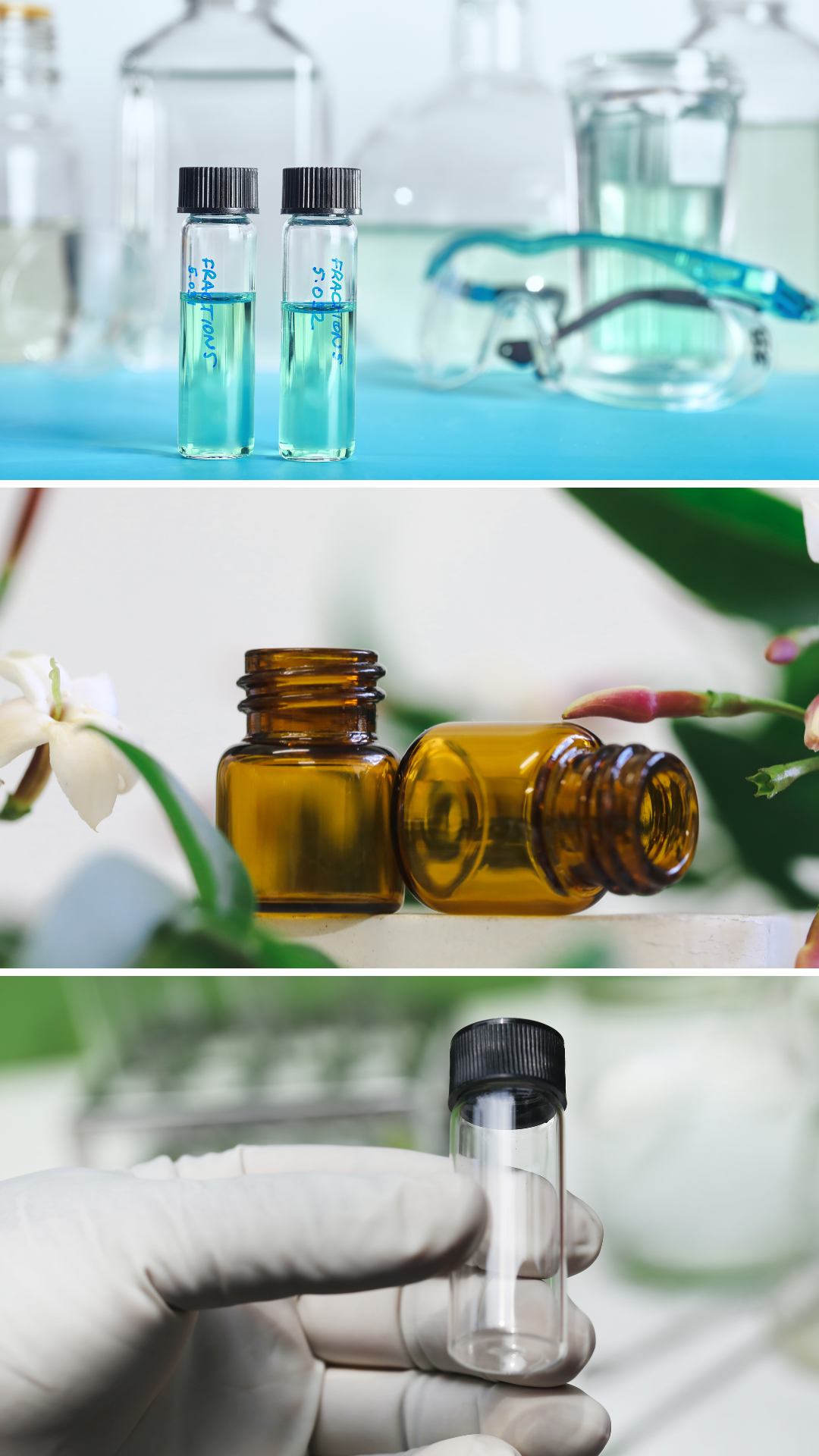
Used for medications, injectable products, and research samples.
Laboratory & Scientific Research
Used for analytical testing, chemical storage, chromatography, and sample analysis.
Cannabis & CBD
Used for concentrates, tinctures, and specialty formulations.
Fragrance & Personal Care
Used for perfume samples, essential oils, and cosmetic formulations.
Nutraceutical
Used for supplements, extracts, and laboratory-grade materials.
Chemical
Used for storing reagents, specialty chemicals, solvents, and compounds.
Government & Municipal
Used for storing water samples, soil samples, and evidence collection.
University & Education
Used for chemistry, biology, science, and lab sampling and research.
Church & Faith
Used for anointing oils, holy water, and ceremonial use.
What Closures Are Used with Glass Vials?
Glass vials are paired with matching caps or droppers designed for a secure seal. Discount Vials offers a variety of matching closures including plastic screw caps, glass droppers, and aluminum caps.
Choosing the correct closure ensures leak prevention, contamination control, and proper dispensing depending on the product.
Discount Vials makes it easy to find the right closure for your container. Simply select the matching closure from the dropdown directly on the glass vial product page.
What Is the Difference Between Amber and Clear Glass Vials?
Discount Vials offers glass vials in clear, amber, green, and blue, with clear and amber being the most widely used colors across industries due to their versatility and ability to protect or display the product inside.
Clear glass vials provide full visibility of the contents inside the container. They are commonly used for laboratory samples, colored compounds, and essential oils where visual product display and inspection is important.
Amber glass vials provide UV light protection, which helps prevent degradation of light-sensitive materials. Because of this protection, amber glass vials are commonly used for pharmaceuticals, oil blends & formulations, nutraceutical extracts, and specialty chemicals.
Are Glass Vials Reusable?
Generally, no. Reusing glass vials can lead to contamination, residue buildup, and risks of breakage. Glass vials can be reused if they are properly cleaned and sterilized. However, reuse depends on the application and industry regulations.
For certain applications, single-use containers are often recommended to maintain product safety and compliance.
Whether you need packaging for testing, sampling, or storage, Discount Vials provides reliable container solutions you can count on.
Explore our full selection of glass vials today!