

Bottle Anatomy: Definitions Explained
Posted by Discount Vials - A BASCO Company on Jan 16, 2026

Bottle anatomy refers to the standardized parts of a bottle and how those parts function together. These terms are used consistently across packaging, manufacturing, filling, labeling, and closure selection. Understanding bottle anatomy helps ensure accurate information is being shared, proper closure fit, and compatibility with filling and handling equipment. This guide breaks down the key components of a bottle and explains the role each part plays in performance and functionality.
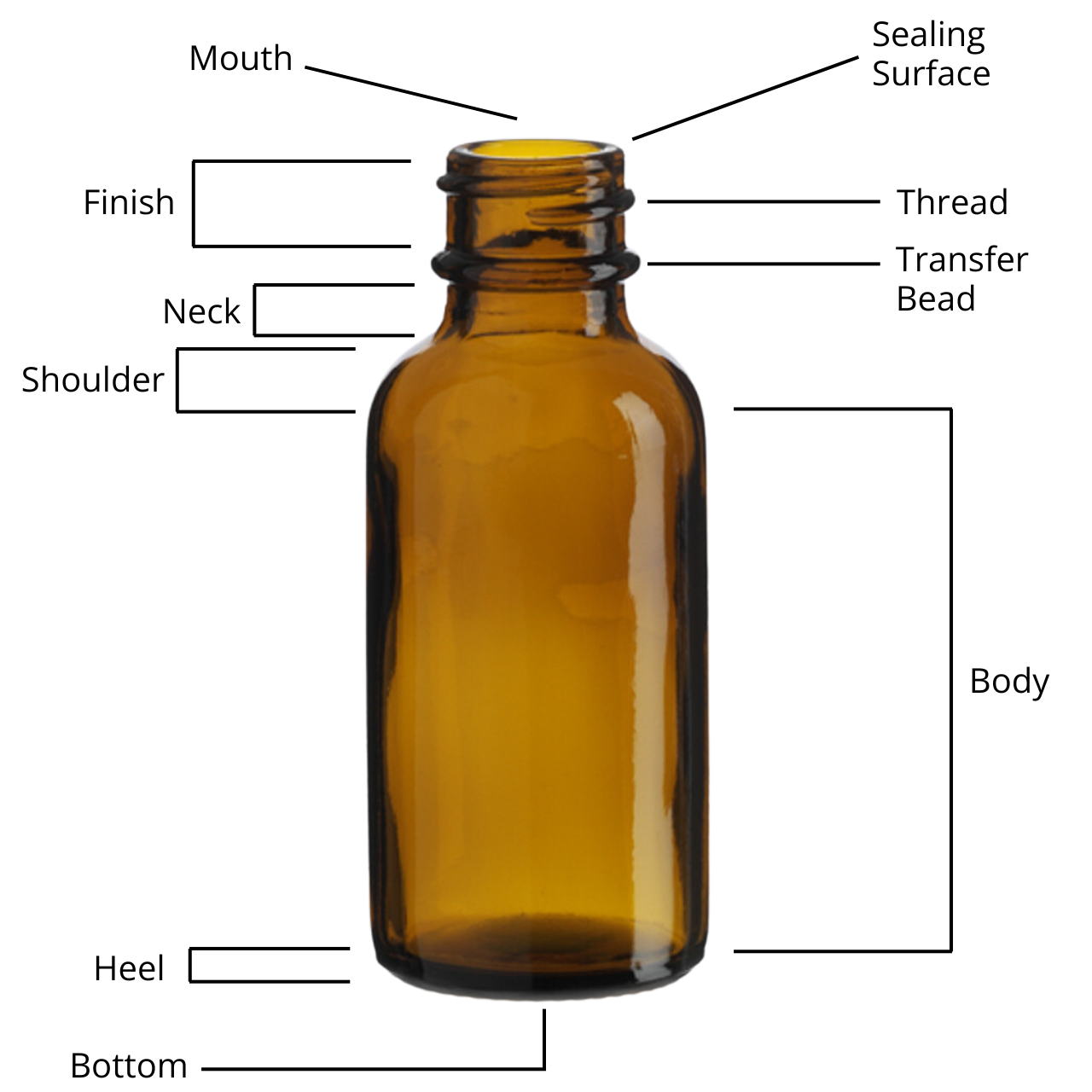 Main Parts of a Bottle
Mouth
The mouth is the opening of the bottle where the contents are dispensed or filled. The diameter of the mouth affects product flow, filling speed, and compatibility with inserts, reducers, and dispensing components.
Finish (Neck Finish)
The finish is the top portion of the bottle where the closure is applied. It includes the threads, sealing surface, and opening diameter. The finish determines which caps and closures are compatible with the bottle.
Threads
Threads are the raised spiral ridges on the finish that allow a closure to screw onto a bottle or jar. Proper thread engagement is critical for creating a secure seal and preventing leaks.
Sealing Surface
The sealing surface is the flat area at the top of the finish where the liner or insert in the closure makes contact. A clean, consistent sealing surface is necessary for leak resistance.
Neck
The neck connects the finish to the shoulder. It may be short or extended depending on the bottle style. Neck height can affect filling equipment and label placement.
Neck Ring (Transfer Bead)
The neck ring, also known as the transfer bead, is a raised ridge located just below the finish. It is used for transferring the bottle from one part of the production process to the next.
Shoulder
The shoulder is the curved area between the neck and the body. The slope and shape of the shoulder vary by bottle style and impact how liquids flow during dispensing and filling.
Body
The body is the main portion of the bottle and holds the contents. It provides the primary surface for labeling and branding. Body diameter and shape affect storage efficiency and shelf presentation.
Heel
The heel is the curved area between the body and the base. It helps distribute stress and adds strength, particularly in glass bottles.
Bottom (Base)
The base is the bottom of the bottle that provides stability. Flat bases are common for most applications, while some bottles may have reinforced or thickened bases for added durability.
Bottle anatomy provides a common framework for understanding how bottles are designed and how their components interact. Every bottle or jar may vary in shape and design, but these terms and definitions provide a consistent reference for understanding their key components. By using correct terminology, businesses can better align packaging components, streamline operations, and avoid errors during production and fulfillment.
If you still need help understanding different bottle types or terminology, contact our product expert team today at 866.509.1834 or info@discountvials.com!