

Glass Vial Anatomy: Understanding Parts of a Glass Vial
Posted by Discount Vials - A BASCO Company on Jun 29, 2026

Whether you're packaging essential oils, laboratory samples, pharmaceuticals, fragrances, or cannabis tinctures, understanding the anatomy of a glass vial can help you select the right packaging for your application. From the neck finish to the bottom of the vial, each component plays an important role in protecting your product and ensuring compatibility with the correct closure.
What Is a Glass Vial?
A glass vial is a small cylindrical container designed to safely store liquids, powders, tablets, capsules, samples, and specialty products. Most glass vials are manufactured from Type I borosilicate glass, which offers exceptional chemical resistance, thermal stability, and durability, making it the preferred choice for laboratory, pharmaceutical, and industrial applications.
Main Parts of a Glass Vial
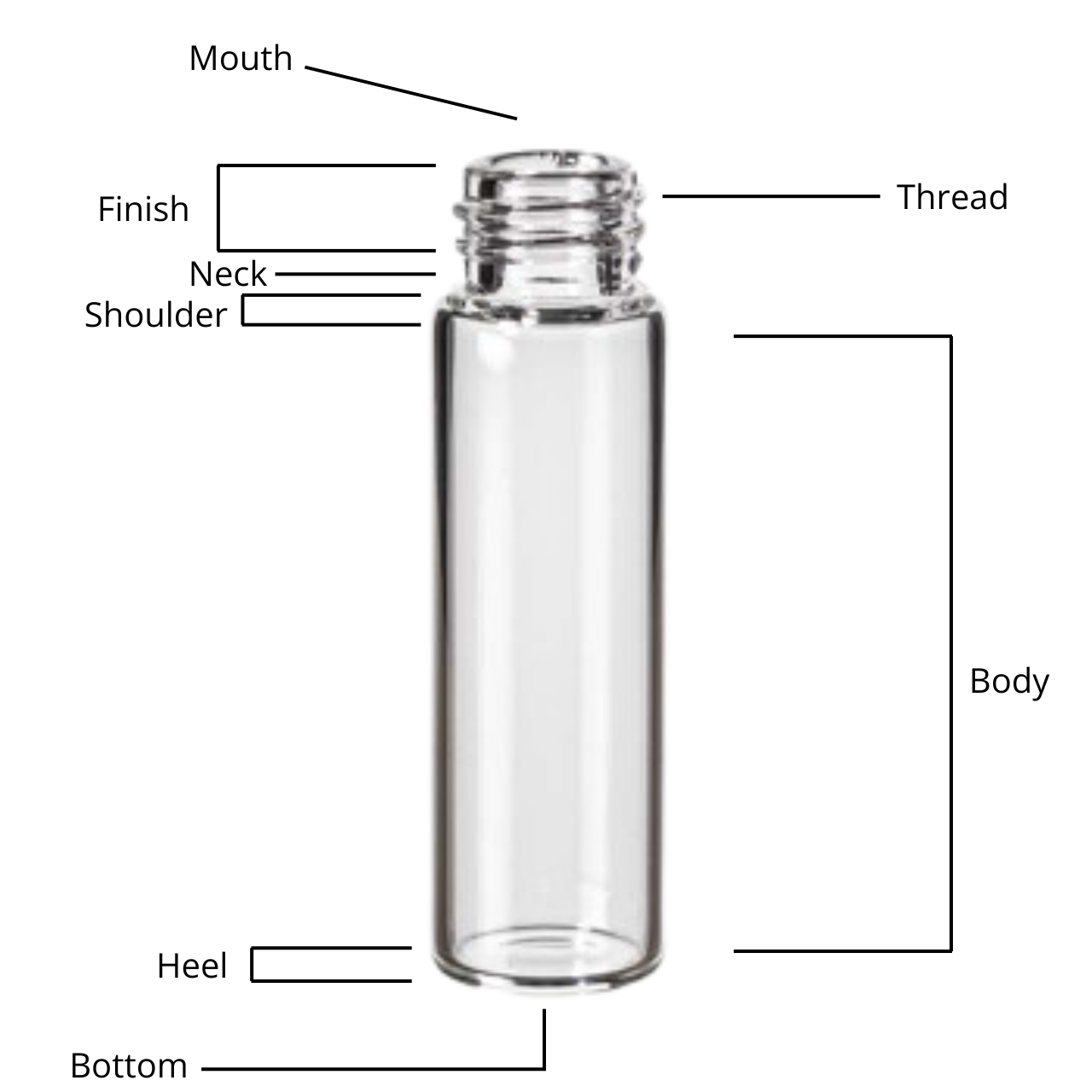
Mouth
The mouth is the opening of the vial where the contents are dispensed or filled. The diameter of the mouth affects product flow, filling speed, and compatibility with inserts, reducers, and dispensing components.
Finish (Neck Finish)
The finish is the top portion of the vial where the closure is applied. It includes the threads and an opening diameter. The finish determines which caps and closures are compatible with the vial.
Threads
Threads are the raised spiral ridges on the finish that allow a closure to screw onto a vial. Proper thread engagement is critical for creating a secure seal and preventing leaks.
Neck
The neck connects the finish to the shoulder. Neck height can affect filling equipment and label placement.
Shoulder
The shoulder is the curved area between the neck and the body. The slope and shape of the shoulder vary by vial and impact how liquids flow during dispensing and filling.
Body
The body is the main portion of the vial and holds the contents. It provides the primary surface for labeling. Body diameter and shape affect storage efficiency and shelf presentation.
Heel
The heel is the curved area between the body and the base. It helps distribute stress and adds strength.
Bottom (Base)
The base is the bottom surface of the vial that allows it to stand upright. A stable, flat base helps improve handling, filling, storage, and transportation.
What Is a Dram?
One of the most common questions we receive is, "What is a dram?"
A dram is a traditional unit used to describe the approximate capacity of small glass vials. While dram sizes are widely used throughout the packaging industry, they are nominal sizes and should not be considered exact fluid ounce or milliliter measurements.
Each dram size corresponds to an approximate volume, but actual usable capacity can vary depending on the vial design and product.
Not sure which dram size you need? Discount Vials offers a convenient Dram Size Calculator on our homepage to help convert between drams, milliliters (mL), and fluid ounces so you can choose the right vial for your application.
Why Borosilicate Glass?
Discount Vials offers Made in USA borosilicate glass vials, known for their:
- Superior chemical resistance
- Excellent clarity
- Thermal shock resistance
- Low extractables
- Long-term product protection
These qualities make type I borosilicate glass the preferred material for laboratories, pharmaceuticals, oils, fragrances, tinctures, and specialty packaging.
Whether you're packaging samples or specialty formulations, understanding glass vial anatomy helps ensure you select the right packaging the first time.
Explore our complete selection of glass vials, use our Dram Size Calculator, and find the packaging solution that best fits your application.
Still have questions? Our team is always here to help. When you call Discount Vials, you'll speak directly with a knowledgeable customer service representative. No automated phone systems, just real people ready to help you find the right packaging solution. Give us a call at 866.509.1834 and let us help you choose the right glass vial for your application.
Need more help finding the right packaging? Explore more resources from Discount Vials.